How many times have you heard an expression or saying (and I mean one that you’ve heard all your life), and never knew where it came from? This may just be the place you’ll find out! In this column, THE REAL MEANING OF COMMON PHRASES, I’ll endeavor to explore the origin of some commonly (and maybe some uncommonly) used phrases and sayings that have become part of the American vernacular. AND I NEED YOUR HELP – please send me any sayings and/or phrases you think the rest of us would like to know just how this expression evolved into our language. You can send it to me through the comment section or at pbenjaytoo@gmail.com. I look forward to hearing from you!!!
HIGH ON THE HOG
(Wealthy, Exalted)
This phrase is often meant to describe someone living the good (high) life, which would imply wealth and eating the better cuts of meat, such as the shoulder and upper leg of the pig whereas paupers eat the trotters and belly. Imagining lords and ladies feasting on roasts certainly seems to be the right context of the phrase, however the origin is much more elusive.
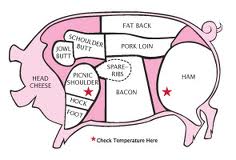
Living High on the Hog
There are no references to living (eating) high on (or off) the hog in any of Chaucer’s or Shakespeare’s works. The phrase high has meant exalted and impressive in the UK since the 17th Century and in America since the early 19th Century.
Initially meaning to be living the high life and eating pork rather than actually eating the meat from high on the pig, it’s interesting to note that one of the earliest instances of this phrase in print comes from The New York Times in 1920; Southern laborers who are “eating too high up on the hog” (pork chops and ham) and American housewives who “eat too far back on the beef” (porterhouse and round steak) are to blame for the continued high cost of living, the American Institute of Meat Packers announced today.
People have been eating pork for hundreds of years yet it seems that the actual phrase high on the hog, meaning the better cuts of meat originated in the 20th Century in the United States and the phrase eat too far back on the beef never quite caught on.

 Bill Ding and his band of clowns are the security patrol for this blog site. He is a favorite toy from the 50*s. By the way sometimes a blog is just an ego-maniacal stream of conscience.
 Pbenjay's Blog
This topic reminded me of seeing a film of Hamlet many years ago and being so surprised how many famous lines came out of this one play, besides “to be or not to be”. Some have permutated over time, such as “every dog has it’s day, for example,) was originally:
“Let Hercules himself do what he may,
The cat will mew and dog will have his day.”
– Hamlet
And:
There’s a method to his madness” was originally:
“Though this be madness, yet there is method in ‘t.”
– Polonius
For more:
http://www.buzzle.com/articles/famous-and-important-quotes-from-hamlet.html
in Ireland there is the phrase “to be on the pig’s back” which is calqued from the Irish…”ar mhuin na muice.”
means more of less to live the good life.
Thank you Daniel for stopping by my blog and leaving a comment. So the phrase has international roots! Tried to reach you thru your name but it was not a live link!