Feeds:
Posts
Comments

Archive for the ‘Obscure Origins of Common and Not So Common Phrases’ Category

OBSCURE ORIGINS of COMMON PHRASES

Did you ever read your kids or your husband the riot act and they didn’t understand a word you meant?  To read someone the riot act is to yell, shout, command and demand that the ruckus or misbehavior stop!!!

King George I, England, edict,

The Riot Act

This is how it came about:  In 1716, King George I of England issued a proclamation that if 12 or more people engaged in a demonstration, his officers were told to read the group this specific ACT and send those rioters home.  Only a few continued to be disruptive after the edict was read because you could be sent to prison for life for not obeying this order.  Usually once The RIOT ACT was read, people calmed down!!!

Read Full Post »

OBSCURE ORIGINS of COMMON PHRASES

I was in a meeting this week and my manager said, “I’ll bet that scared the Dickens out of you”.  This got me thinking about what possible Charles Dickens story could be so scary that this phrase was born???  NONE- because that’s not the origin of the phrase and over the years we Americans have further obscured the origin due to the capitalization of the word, Dickens.

the merry wives of windsor, what the dickens?, scare the dickens out of you, devil

What the dickens does this mean?

Dickens or rather, dickens was used by Shakespeare as a euphemism for the devil.  In his play, The Merry Wives of Windsor the question is asked, “What the dickens”? to mean “What the devil”? So when someone says scare the dickens out of you – they mean to scare the devil out of you and I guess there’s  a little devil in all of us!


Read Full Post »

TATTLE -TALE

Tattle-Tale, tattle-tale!!! And I thought this might have something to do with a rattle snake’s tail…and no clue as to why?

Actually the origin of this name-calling phrase has its roots in a combination of a Middle English word derived from Old Dutch, tatelen, which meant meaningless  prattle or stammering and was used in reference to children and an old English expression tell-tale, which was used the way we use tattle-tale.

There’s an old nursery rhyme: “Tell-tale-tit, your tongue will be slit, and all the dogs within the town shall have a little bit”.  As time went on, tatelen became tattlin which was thought of as tattling and soon morphed from meaningless prattle to idle gossip to telling tales to tattle-tale. The manner in which this phrase came into being through the morphing and blurring of words is the way many of our everyday phrases worked their way into our language.

TILL THE COWS COME HOME

I think I’ll be waiting till the cows come home for my son to call me!!  Surely your mother said this to you at one time or another in your life.  The phrase refers to the nature of cows, notoriously languid creatures who move only at their own pace.  The imagery is perfect, as you imagine the cows just ambling along slowly and taking a long time to get there.

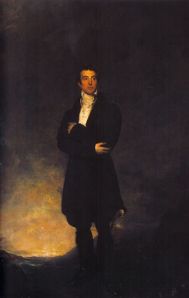
It is believed that the phrase was in use prior to 1829 and may have originated in Scotland – it appeared in print in The Times in January of that year in reference to the Duke of Wellington and what he should do if he wished to maintain a place in Peel’s cabinet:
Till the cows come home,

The Duke of Wellington

If the Duke will but do what he unquestionably can do, and propose a Catholic Bill with securities, he may be Minister, as they say in Scotland “until the cows come home.”

In 1933, one of our great comedians known for his witty use and play on words, Groucho Marx, had this to say in the film, Duck Soup:

“I could dance with you till the cows come home. Better still, I’ll dance with the cows and you come home.”


Read Full Post »

How many times have you heard an expression or saying (and I mean one that you’ve heard all your life), and never knew where it came from?  This may just be the place you’ll find out!  In this column,  THE REAL MEANING OF COMMON PHRASES, I’ll endeavor to explore the origin of some commonly (and maybe some uncommonly)  used phrases and sayings that have become part of the American vernacular.  AND I NEED YOUR HELP – please send me any sayings and/or phrases you think the rest of us would like to know just how this expression evolved into our language.  You can send it to me through the comment section or at pbenjaytoo@gmail.com.  I look forward to hearing from you!!!

HIGH ON THE HOG

(Wealthy, Exalted)

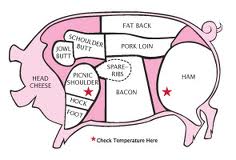
This phrase is often meant to describe  someone living the good (high) life, which would imply wealth and eating the better cuts of meat, such as the shoulder and upper leg of the pig whereas paupers eat the trotters and belly. Imagining lords and ladies feasting on roasts certainly seems to be the right context of the phrase, however the origin is much more elusive.

pork belly, trotters, pork butt, pork shoulder, cuts of meat

Living High on the Hog

There are no references to living (eating) high on (or off) the hog in any of Chaucer’s or Shakespeare’s works.  The phrase high has meant exalted  and impressive in the UK since the 17th Century and in America since the early 19th Century.

Initially meaning to be living the high life and eating pork rather than actually eating the meat from high on the pig, it’s interesting to note that one of the earliest instances of this phrase in print comes from The New York Times in 1920;      Southern laborers who are “eating too high up on the hog” (pork chops and ham) and American housewives who “eat too far back on the beef” (porterhouse and round steak) are to blame for the continued high cost of living, the American Institute of Meat Packers announced today.

People have been eating pork for hundreds of years yet it seems that the actual phrase high on the hog, meaning the better cuts of meat  originated in the 20th Century in the United States and the phrase eat too far back on the beef never quite caught on.


Read Full Post »

« Newer Posts