Feeds:
Posts
Comments

Archive for the ‘Obscure Origins of Common and Not So Common Phrases’ Category

YUP, it’s DONE! 

Of course I had to go “balls to the wall” while “under the gun”.  And now to explore the origins of these motivational expressions!

Balls to the Wall

It probably doesn’t mean what you think, or do you?  Well it does mean, as in my case, to go all out, full throttle as fast as you can.  And full throttle is the key to the meaning and origin of this phrase.  It’s a military aviation term;  Many planes have a ball-top grip on the control sticks.  The throttle, the mechanism to accelerate the engines, is pushed all the way forward towards the firewall which prevents an engine fire from entering the rest of the plane.  The joystick, which if pushed forward to the firewall sends the plane into a dive, so literally putting the balls to the wall would send the plane into a maximum speed dive and figuratively going balls to the wall is doing something all-out with maximum effort.

Under the Gun

This one’s so simple, I’m sure you already know it or will figure it out in a second.  Want to get someone to do something real quick – point the gun at them!  And as in my case, you can do it to yourself although that does sound rather suicidal.

I managed to get the hat done before dinner, scrape the hot glue off my fingertips, pack up the ribbons, sweep away the scraps of leaves and wire clippings.  The end result is slightly different from I had planned – not sure how I forgot about the “mirror” effect.  I had done the whole hat before I realized my error!  However, I figured a flower here, a ribbon there, a bit more crinoline and probably  I could make it work.  I think I did, do you?

Easter Parade, New York City, purple hat, yellow lillies

Purple and Yellow - So EASTER!

Read Full Post »

What do those two expression conjure up in your mind?  Well if you are in my age category, these phrases have  been used for years to denote a deadline that is rapidly approaching, the sense of urgency needed to complete a task.

This is a two-part blog: First of all let’s explore the origin of these expressions.

Down to the Wire

There is a wire strung above the Finish Line on race track so that a camera set above the wire can photograph the contestants as they cross.  Most often used in reference to horse racing where two horses may cross almost simultaneously.  The camera captures the image of one horse winning by a nose.  The metaphor has extended to other races such as political elections where the candidate can win by a nose, get nosed out and finish out of the money.

Back Up Against the Wall

I was surprised when I did the research about the origins of this phrase.  I stated that it had more to do with a deadline when actually it’s  more like making a last-ditch effort (before the deadline?) to win/complete because retreat is unavoidable.  It literally means when your back is up against the wall you have no choice but to persevere because you have backed up as far as you can, and are now against the wall with the enemy advancing. 

So what is part two and how are they related?  It’s now Thursday at 4:00pm and the Easter hat has yet to be made!!! YIKES!  Time is running out like a pin hole in a water bottle – NO, actually I think I am now in the pin-hole-in-a-balloon stage and it’s about to whiz right past me. 

I’ve  made several Easter bonnets over the years, sometimes re-working a previous hat into a new creation, sometimes inspired to start from scratch.  So what’s  happened to me this year? I believe these are the inside/outside forces that are counter-attacking my creative efforts;  I’ve been slightly down and out, mildly depressed for the last couple of months (don’t ask, there are so many reasons and none to be aired in the blog) and BECAUSE of that I, as has been my life-long nemesis – Eat.  It has been a sugary binge of cookies, cheesecake, and ice cream, preceded by two of my favorite food groups,  peanut butter and bread.  Ok, we should probably also throw in the pasta, cheese and nuts into the mix.  This all adds up to an extra 10 lbs so I’m not feeling like I want to dress up (probably won’t fit anyway) for the Parade and  so who needs a hat?

Additionally I’m annoyed at my daughter because she can’t find the flower ring I made for Finley last year.  I planned on re-doing it with pink roses.  Now I have to return the roses and I guess Finley won’t have an Easter bonnet.  But as my husband reminded me, what’s important to me is not necessarily important to my daughter.

Lastly, we have the inevitable holiday celebration/dilemma/debacle that hounds most non-intact (read divorced) families.  I understand that she is in the middle so to speak, so instead of Peter and I and Chiara and family strolling along the Avenue, a rather unwieldy number of participants will be converging for Brunch, Parade and supper – that’s not exactly what I want to do.  Besides, we’ve now been invited to join a fun group that takes dressing-up in period clothes very seriously for a drink at The University Club and also meet up with them at a predesignated spot where a mutual friend and superb band leader, Michael Arenella and his Dreamland Orchestra is going to perform on Fifth Avenue.   So I think we’ll go to the Parade with my son, maybe meet up with the family gang on Fifth Avenue but if not, we’ll see them all later for a light supper.  BUT of course, I MUST stop typing and go create the hat 😦

Finley Ray, Easter parade 2011, Fifth Avenue, Easter hat, easter bonnet

Finley and Gigi on the Avenue 2011

Read Full Post »

Turner Classic Movies logo

The ONLY Channel

OBSCURE ORIGINS OF COMMON AND NOT SO COMMON PHRASES

Where do out of date, out of fashion phrases and old sayings go?  Why, they end up in Pbenjay’s blog!  How I happen to pick one to research its origin is often a function of watching an old movie.  Those of you who really know me, know that the other adult (male)in the house has control of the remote and although we have 400 channels, he only wants to watch whatever movie is on TCM.  So every now and then I hear a phrase that I heard growing up (and had forgotten).

Little Shaver – Refers to a young child or baby.  The origin is unknown, however this was a popular term used right up through the early ’50’s.  Usually the “little shaver” was a young boy and the term means he’s a little “chip” or “shaving” , as in “off the old block”. The Old Block being the parents.  Nice to be thought of as a block of wood!

Nose out of joint – This dated saying is used to describe someone who is upset, possibly offended.  It’s origin is its use in a book  by Barnaby Rich, who wrote His Farewell to Militarie Profession in 1581.  The line is: “It could bee no other then his owne manne, that has thrust his nose so farre out of ioynte.”  I never really thought of my nose as having a joint.  If it does, could you get arthritis in your nose?  MMmmmm…..


Read Full Post »

Ever wonder where some of the phrases we use in our everyday language?  I do and in this blog I have often featured phrases that once were common and now are obscure to generation X and Y.  Sometimes a phrase fades away because it’s no longer applicable or contains words that have dropped out of usage.

PULL OUT ALL THE STOPS has come to mean let it all go, or let it all out, or put the force of 100% effort into something.  This past Friday, Peter and I took our granddaughter, Finley, to the Morris Museum in Morristown, NJ.  We really wanted to see their collection of antique music machines and automata.  It is an amazing collection with gorgeous elaborate music boxes of every evolution and Living Dolls and Mechanical Musical Instruments ever since we saw the movie, HUGO.

Now you are wondering what does all that have to do with this blog post?  The early Music Machines operated on a bellows system.  The docent demonstrated several of the mechanical musical machines.  There was  large wooden instrument that worked with bellows and you could adjust the volume  by pulling out a row of stoppers

And there you have it -all the sound was let out, by pulling out all the stoppers!

Antique music box with brass cylinder

French Automaton - Lady Knitting

Read Full Post »

I really like doing these posts;  in between blogs in this category when I hear a phrase that I grew up with but know that none of my kids or their friends would have a clue what it meant, I try to jot  it down.  Phrases come and go out of style and in this day and age when “sick”  means great and “down” means agreement, I’m just as clueless about today’s slang as the younger generation is about mine.

My readership is about 50/50 in terms of those of “a certain age” like me and a bunch  under the age of 40!  So tell me, have you heard these phrases lately and do you know what they mean or how they came to be?

Taking a shellacking – This is a slang phrase meaning you are being beaten down by someone.  In sports you hear that one team is taking a shellacking by the  opponents.  How did the noun, shellac, which means a thin protective coating come to mean beating someone is still somewhat obscure.  Word Detective suggests that shellac which is the last and final step in the finishing of furniture may imply that whoever is taking the shellacking is all finished.

Short Shrift – This phrase means something or someone is receiving careless attention, a quick but cursory view.  The origin of the phrase comes from the 16th Century when shrift  meant that brief time prior to a prisoner’s execution when he was granted the opportunity to confess to a priest.

Charley Horse – Commonly refers to muscle cramps in your thigh or calf muscles.  This condition is known throughout the world under names such as Donkey Bite, Thigh Hen, Horse’s Kiss.  There is some allusion to Charles “Old Hoss” Radbourn, a major league pitcher who was known to suffer frequently from cramping muscles.

Church Key – Is actually a term for a bottle/can opener.  Originally a church key was a small metal device designed to open the caps (known as crown-corks) of beer bottles.  It resembled the shape of an ornate key to unlock the church doors.  Beer was marketed in cans around 1935 with flat tops and was sold often with a metal device that would pierce a triangular hole in the lid.  The term church key was simply transferred to the new opener.  

San Lorenzo church key

Church Key

Who Shot John – I, myself, never heard this term until I heard Judge Judy use it and it was used to describe superfluous details, aka bullshit!  However, this old term, probably southern, was/is commonly used to describe the way someone would look if he/she were disheveled, or had on too much make-up, or any instance where you  looked bad and not proper.   And again, also to imply that you didn’t want to hear any nonsense, just the truth as in “Don’t give me any who shot John“.  And as far as an origin, the best I can find is that it refers to John Wilkes Booth, but why???

bottle openers, crown corks

Beer Bottle Openers

can openers, beer openers, church keys

Early Beer Can Openers

can opener, bottle opener

Church Key Today

Read Full Post »

Future Shock

FUTURE SHOCK

OBSCURE ORIGINS OF COMMON PHRASES

and some OBSOLETE ones too

In one week I heard three almost-obsolete phrases used…so you can safely assume I’m hanging out with people my own age, lol, lol.  With language changing at a speed equivalent to Alvin Toffler‘s Future Shock,  that is phrases, terms, and words I grew up with are now nearly obsolete and now there is a host of new words or rather in my opinion old words and the younger generations have assigned new meanings to them – but more about that later.

First off, I heard someone say, “You don’t know diddly-squat about….”.  So what exactly is diddlysquat? I think you can pretty much guess that anyone under the age of 50 is going to say, “you don’t know shit and that’s the meaning of diddly-squat.  Actually in this case, squat is a euphemism  for the word shit.

The original term doodly-squat dates from about 1934.  There is no definite origin except that the word doodly was used to refer to: a fool, a Union soldier, a penis, cheating…well you get the gist.  And squat was the nice way to say shit.  About 1963 Diddly-squat appeared in dictionaries and in 1964, Diddly-shit.

Then in a TCM movie (do we ever watch anything else !!??), one of the characters went “on the lam”.   The roots of this term are in Old English; lam, lammister, on the lam all refer to a hasty departure and were common in thieve’s slang.   The allusion in lam is to beat or beat it in Old English meaning to leave.

Lastly, I heard the term larder which I know to mean a cool place built to store the food supply prior to refrigeration or ice boxes.    Larders were small rooms or areas usually adjacent to the kitchen.  This room would have shelves and maybe a small window covered in fine mesh to keep air circulating but flies out.  Some would have hooks on the wall to hang a slab of meat.

I know this next is worthy of a blog post unto itself so I will only use one word as an example and I know I used it before.  Today’s younger generation and I’m embarrassed to say that my soon-to-be-34 daughter, wife and mother of two darling little girls uses this term regularly.  As in, “so we went to this random restaurant” and “I don’t know, it was some random girl” and “why don’t you just get some random toy” – WTF?  A new language in the making.  RANDOM means: adjective

1.  

proceeding, made, or occurring without definite aim, reason, or pattern: the random selection of numbers.
2.  

Statistics . of or characterizing a process of selection in which each item of a set has an equal probability of being chosen.
3.  

Building Trades .  

a.  

(of building materials) lacking uniformity of dimensions: random shingles.
b.  

(of ashlar) laid without continuous courses.
c.  

constructed or applied without regularity: random bond.
–noun  

4.  

Chiefly British . bank3 ( def. 7b ) .
–adverb  

5.  

Building Trades . without uniformity: random-sized slates.

—Idiom

6. at random, without definite aim, purpose, method, or adherence to a prior arrangement; in a haphazard way: Contestants were chosen at random from the

studio audience.

I’m going to start taking note of more of the new meanings  being assigned to words  and in the future we can explore  just what they are really saying. LOL

Read Full Post »

“Heebie Jeebies” by Louis Armstrong and his Ho...

Image via Wikipedia

One day I said to Peter, “that gives me the Heebie-Jeebies” and he looked at me like I was speaking in tongues.  I couldn’t believe he had never heard the phrase before.  It’s a great phrase and used in the right context the way it rolls off your tongue, it just conveys its meaning.

Heebie-Jeebies means a feeling of anxiety, apprehension or illness. And this type of two-word phrase is known as a Rhyming Reduplication. It is similar to other phrases such as Hocus-Pocus and Mumbo-Jumbo are similar with a bit of the jitters thrown in.

Heebie and Jeebie  as separate words don’t mean anything.  However, in the 1920’s, a bunch of  new nonsense rhyming pairs became popular in the United States.  There was the Bee’s Knees, Okey-Dokey and Zig-Zag.

The term is widely attributed to William Morgan “Billy” de Beck. The first citation of it in print is certainly in a 1923 cartoon of his, in the 26th October edition of the New York American:

You can find Rhyming Reduplications in our everyday language in use starting in the nursery with phrases like Choo-ChooWee-Wee and then as adults there’s Hanky-Panky – today we have Bling-Bling, Boob-Tube and Hip-Hop. The rhyming and reduplication of words dates back to the 14th Century with Riff-Raff and about a thousand years ago Willy-Nilly appeared.

Once you start thinking about these crazy little phrases, you’ll be coming up with your own list.  Here’s a head start:

Arty-Farty

Chick-Flick

Boogie-Woogie

Helter-Skelter

Fuzzy-Wuzzy

Fuddy-Duddy

Gang-Bang

Hoity-Toity

Nitty-Gritty

Namby-Pamby

Jeepers-Creepers

Razzle-Dazzle

Isn’t this fun?


Read Full Post »


Grey Catbird / Dumetella carolinensis

Image via Wikipedia


Obscure Origins of Common Phrases

It was Friday night and we were watching MSNBC and Keith Oberman was reading a short story from a James Thurber book.  For those of you who are NOT leaning left and were listening to some Fox news rhetoric, this reading always takes place on a Friday evening on his show. Anyway, at some point in the story, this paragraph was read:

“She must be a Dodger fan. Red Barber announces the Dodger games over the radio and he uses those expressions… ‘sitting in the catbird seat’ means sitting pretty, like a batter with three balls and no strikes on him.”

Heard it all my life, know what it means and wondered buy why and how did it come about.  My guess last night was that it had something to do with sailing and boy was I ever wrong!!!

The phrase is of American origin and refers to the common gray catbird who is in the same group of birds that the Mockingbird is in and they are known as mimic thrushes. The Catbird can mimic the sound of a cat meowing.  The catbird seeks the highest perch to sing and display.  It may also have been the source of an earlier term with much the same meaning – sitting pretty.


Read Full Post »

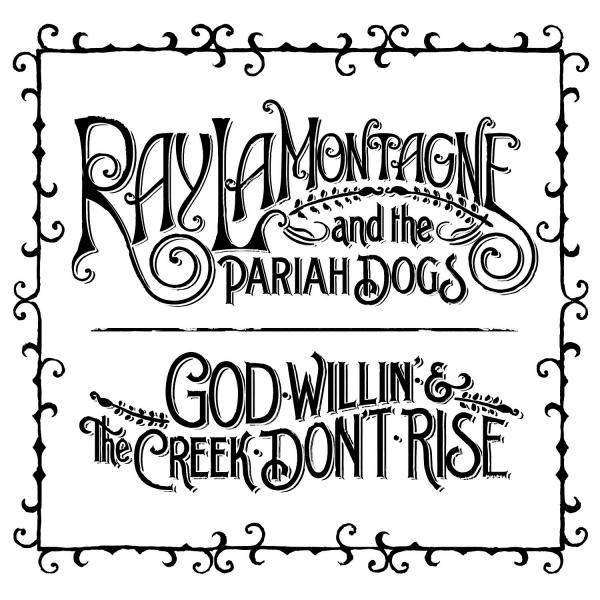
The Good Lord Willing and the Creek Don’t Rise

Ruby, one of my readers,  brought this phrase to my attention and it just so happens that recently I saw it on the cover of a CD in Starbucks.  So when something as obscure as this turns up twice in one week I figure it should be in the blog!

pariah dogs, Little Big Town, Creek, Muscogee Indian tribe

God Willin' & the Creek Don't Rise

If someone says, “God willing and the Creek don’t rise” they’re looking to achieve a goal. When they use this phrase, it means that they will achieve their goal as long as there are no outside forces of which they have no control preventing them from doing just that.

Well it turns out that if your first impression was that the phrase is referring to a creek as in body of water – we’re wrong! This phrase first appeared in print in a letter written by Benjamin Hawkins in the late 18th Century.  Hawkins was a politician in the 18th and early 19th Centuries and an Indian diplomat.  This was a time when American Indians and white settlers were in constant battle over land in the United States.  Hawkins was in the South when he was requested to return to Washington DC by the President.  He wrote back. “God willing and the Creek don’t rise”. He capitalized the word Creek and it has been deduced that he was referring to the Indian tribe.  The Creek Indians also known as Muscogee tribe was located in the South East, where Hawkins had been located as well.  The possibility of an Indian uprising was great.

This figure of speech is still in use today and is a lyric in a 2008 song by the country music group, Little Big Town and the song is The Good Lord Willing and the lyrics are Good Lord and not God.

So there you have it and this blog will get published and go out to hundreds of readers, the good Lord willing and the creek don’ t rise!!!


Read Full Post »

Phrases and clichés are generational and so many of the ones I heard growing up have practically disappeared from our language.  I thought I’d resurrect a few if just for the amusement of my younger readers.

  1. Going to hell in a handbasketused to describe a situation headed for disaster.  It’s thought that the use of the word handbasket came about because the heads of guillotine victims fell into a handbasket and headed straight to hell.
  2. Fiddle dee dee – an expression of impatience, disbelief or frustration.  Most famously quoted in Gone With The Wind.
  3. A stitch in time saves nine – a timely effort will prevent more work later. The stitch in time is simply the sewing up of a small hole in a piece of material and so saving the need for more stitching at a later date, when the hole has become larger, Clearly, the first users of this expression were referring to saving nine stitches.
    proverb, cliche, homily, antiquated phrase

    A Stitch in Time

  4. The cat’s pajamas – a slang phrase from the 1920’s used to describe  something that’s the best at what it does and pajamas had just come into fashion.
  5. Tomfoolery – playful or foolish behavior; silly trifling.
    What is a tomfool? Today, it’s simply someone who acts like a fool, but in the Middle Ages it was a nickname for any half-witted man, a Thom Foole.

Read Full Post »

« Newer Posts - Older Posts »