Feeds:
Posts
Comments

Posts Tagged ‘Mental health’

Apologies readers, today just got away from me and I was unable to post our weekly Mental Health Monday but here it is.  This week, Dr. Barry Lubetkin explores sexuality, fetishism and fantasy, I’m sure you’ll want to read this week’s column.  Here is what he has to say:


BDSM_buttons_spanking_L

BDSM_buttons_spanking_L (Photo credit: CapesTreasures)

Since I began my career over forty years ago, no book has ever stirred the passions of my female patients more then the “pornmantic” best seller Fifty Shades of Gray .  It gave a voice to the often hidden sexual drives of women who desire more than just the vanilla, missionary position, warm and cuddly sexual play. It brought BDSM (bondage, discipline, sadism, masochism) out of the closet and into suburban bedrooms throughout America.


The powerful eroticism of enhancing sexual intimacy with fetishistic clothing, dominant submissive role playing, spanking, power exchange, etc., has finally been experienced by many thousands of couples who knew these fantasies existed in the deeper regions of their minds, but never felt free enough to express them. It is helpful that the main ethos of the BDSM community is to always keep these activities SAFE, SANE, and CONSENSUAL. The Internet is full of websites designed to guide the adventurous into experiencing a more variable and satisfying sex life.


Far too many marriages suffer from a deteriorating sex life because partners are unwilling to “take a chance” and try something different. A 62 year old male patient had felt embarrassed and “perverted” to ask his girlfriend to wear a particular outfit during sex. Her willingness to do so greatly enhanced his arousal level and ultimately improved their sex life overall.


Be willing to have those initially embarrassing but ultimately freeing conversations with your partner about fantasies, turn offs, “hot spots” during sex play. Talk “dirty” if that moves you, try new body areas to explore, but always…ALWAYS, keep verbal communication going, so everyone remains on the same page. As always I am available at IBT104@aol.com for more info.”


Dr. Barry Lubetkin has been a guest on several talk shows including  the Oprah Winfrey show and Carole Altman’s. Ms. Altman is the author of Electrify Your Sex Life: How To Get Rid Of Sexual Hangups and Inhibitions.


Enhanced by Zemanta

Read Full Post »

We ask our friends for recommendations for doctors, dentists, babysitters, hairdressers, real estate agents and just about anything and everything else BUT we are shy, embarrassed and hesitant about asking for a referral of a “good therapist”.  And then there’s the question as to what type of mental health professional we should seek out.  Dr. Barry Lubetkin sheds some light on this subject today. 

Mental Health Awareness Ribbon

Mental Health Awareness Ribbon (Photo credit: Wikipedia)

People are often very confused about who to seek out for mental health diagnosis,therapy, counseling and medication. And once some professional has been chosen,how does one know that this is the right person for them. Unfortunately often, because of the stigma that still is associated with the need for Psychiatric or Psychological help, friends recommendations are often replaced by random choices from impersonal insurance provider lists.

These are the categories of mental health professionals:
Psychologists PhD or PsyD:  A minimum of 4 years post college graduate training plus a 1 year clinical internship. Specializing in providing various types of psychotherapy and diagnostic assessment. An ABPP distinction after their degree signifies advanced competence in their particular specialty.

Psychiatrists MD: A minimum of 4 years post college Medical School, plus a 1 year internship and at least a 2 year residency in Psychiatry, specializing in diagnosis and psychopharmacology treatment of mental disorders. Fewer and fewer Psychiatrists spend their time providing hour-long psychotherapy sessions.

Social Workers: MSW, LCSW, DSW: A minimum of 2 post college years, plus at least 1 year of intense clinical practicum training.
Mental Health Counselors. CMHC, LMHC: A minimum of 2 post college  years to earn the Masters degree in their specialty,and at least 2000 hours of intense supervised clinical training.

When choosing a therapist, you must ask yourself whether you have “chemistry” with the professional…? Are you feeling understood, not intimidated, trusting? And most importantly, does this person have the requisite training and experience to deal with your particular problem? Don’t be afraid to ask  what specialized advanced workshops or training programs they have taken pertaining to your particular problem…Have they treated people with your problems before…?  How long should you expect to be in treatment?

In this most important of all medical endeavor…exploring your mind, you need to be a smart and knowledgeable consumer. I am available at IBT104@aol.com for further guidance.

Enhanced by Zemanta

Read Full Post »

Available through Amazon

Available through Amazon

Where are the lines drawn between the disease-stricken hoarders, the messy clutterers and the over-enthusiastic collectors? Dr. Barry Lubetkin, Phd, ABBP offers us insight on the distinction between a diagnosed disorder and a hobby or personality characteristic.

Hoarders and Clutterers and Collectors Oh My!!!

The Psychiatric problem of hoarding had been under diagnosed for many years .But recently with increased media attention(see several New York Times articles in the past four months),the

wildly popular reality TV show “Hoarders” and recent major advances in the diagnosis and treatment of this mental affliction, many more people are getting professional help.
It is important to point out that while many of us may have lived with and accepted clutter in our homes for our entire lives, being diagnosed as a hoarder requires that the clutter must seriously interfere with the quality of our lives and risk our safety. Navigating through dangerous paths in our home with furniture and garbage piled on either side, shame of exposure leading to living lonely isolated lives, or irrational superstitious beliefs that cleaning up or throwing out certain articles will lead to terrible consequences………these all will confirm the diagnosis.

The etiology of hoarding is multi determined…….a previous diagnosis of obsessive compulsive disorder, prolonged depression, unkempt,and chaotic childhood homes, have all been implicated. Even the well intentioned collector who has enjoyed his passion for saving and displaying his collections is sometimes at risk if other psychiatric disorders emerge and create a vulnerability to depression and indifference to caring for themselves or their living conditions.

Treatment involves a variety of interventions :Anti depressant medication,engaging family support during the clearing process, Cognitive Behavior Therapy to reduce anxiety and panic and designed to educate the hoarder on the irrational and superstitious thinking elements of the disorder,and guided practice in controlling their environment post treatment.

With less serious clutter collectors who feel their mess has gotten difficult for them to control, I suggest starting with small portions of the affected areas (one corner of the bedroom,piles of books and papers on the floor,etc), and slowly progress over time to prioritize what to throw out. Dividing your “stuff” into A ,B and C groups………must keep, maybe keep, must dispose, is often very helpful. Feel free to contact me at ibt104@aol.com for further advice.

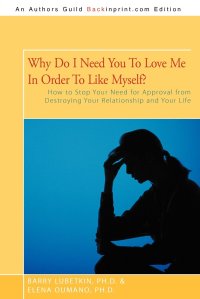
 Barry Lubetkin, Phd, ABBP is co-director of the Institute for Behavior Therapy in Manhattan.  Dr. Lubetkin has written two widely acclaimed books. Bailing Out (Simon and Schuster and Prentice Hall Press) and Why Do I Need You To Love Me In Order To Like Myself (Longmeadow and Borders Press). In addition, his 3-disc audio series on treating insomnia Dr. Barry’s Sound Asleep has recently been published. 

Enhanced by Zemanta

Read Full Post »

One Fear illustration from Book of Fears

One Fear illustration from Book of Fears (Photo credit: Wikipedia)

PHOBIAS and IRRATIONAL FEARS

By Dr. Barry Lubekin

Human beings experience hundreds of different phobias and overwhelming fears and anxieties. Many are deep rooted, and find their origin in long forgotten childhood traumas. Others develop more recently and are traced to reactions to frightening events or complex relationship dilemmas. When these phobic reactions actually interfere with normal daily functioning,professional intervention is the best course.

Here is an example of the 2 origins of an airplane flying phobia: the first patient was traumatized at age 11 when flying with her newly divorced parents,the plane hit very unsettling turbulence and she was very uncomfortable flying as an adult.  The second patient, panicked at the possibility that her husband was cheating on her,refused to fly to various job assignments, fearful that the husband would carry on his affair while she was gone! Note….the same fear with two very different origins, and treated in very different ways.

The most effective treatment for irrational simple phobias is called “flooding” and involves gradual exposure in imagery and in real life to the phobic object or situation. More complex phobias( eg. The fearful wife above) are best treated with cognitive behavior therapy(CBT) involving assertiveness training, meditation and relaxation techniques, and challenging irrational needs for dependence,and superstitious beliefs.

Do you have a phobia? Describe it to me in a private email. Send to IBT 104@aol.com and I will be happy to let you know the best treatment options available. Make your message attention to Dr. Lubetkin. Looking forward to hearing from you!

Dr. Barry Lubetkin is in private practice in NYC. He is the co-director of the Institute for Behavior Therapy.  He is a published author and frequent guest on TV and radio shows as an authoritative voice on mental health issues.


Enhanced by Zemanta

Read Full Post »

This week, Dr. Barry Lubetkin gives us some insight on our need to please!

Do you have the “Disease to Please”????

Approval cravers are terrified that if they garner disapproval from certain friends and family, these people will disappear. Many of my patients have told me that they genuinely fear that if they anger a significant person in their life, that person would drop away forever. The mental distortion operating here is that all of the wonderful years of friendship and warm shared experiences will be negated by a single incident of disagreement.

Margaret Adam

Margaret Adam (Photo credit: Joi)

While that may occasionally occur,most good friends are able to overlook single incidents and talk things over.

In a 1971 article Margaret Adams wrote about the “compassion trap “where females in particular believe that their very existence is defined by service and compassion for others. Overcome this self defeating philosophy whenever you are annoyed or upset with another’s behavior by the following steps:

1. Express your upset directly without candy coating it.

2. Clarify your expectations of the other person and the goals you desire

3. Challenge your internal irrational fears of retribution

4. Prepare for resistance or refusal from the person to go along with your desire or goals by having in your mind an alternative or compromise plan .

Barry Lubetkin is co-director of the Institute for Behavior Therapy in Manhattan.  If you have a question or concern that you would like his opinion on, please leave a comment here.

Enhanced by Zemanta

Read Full Post »

I’m so pleased to introduce MENTAL HEALTH MONDAY to my readers.  I hope this becomes a regular feature and you will avail yourself of this opportunity to post a question or concern or contact our contributor, Barry Lubetkin, Phd, ABPP.

Barry Lubetkin is the Director of the Institute for Behavior Therapy and past president of the American Board of Behavior Therapy.  He has been a guest on Oprah Winfrey‘s show, a quoted source for numerous articles and a published author.  His latest book is Why Do I Need You To Love Me In Order To Like Myself.

Available through Amazon

Available through Amazon

Mental health tip for January 27, 2014

Nearly all anger feelings and outbursts are preceded by the cognitive belief represented by the words “should” or “must”….“He should never act that way”“She must act more fairly toward me”“He must stop drinking, I can’t stand it anymore”.  “The teacher should do more to discipline that child”….etc.  When we make unreasonable and inflexible demands on others or on the world to act in a certain way.  We set ourselves up for rage and upset when our irrational expectations are not met.  It is far better to wish or desire others to change rather than demanding and requiring them to do so…Or as famous Psychologist Albert Ellis once said: “Stop SHOULDING on yourself!!!”

Enhanced by Zemanta

Read Full Post »

Love ? I love love love you.

Love ? I love love love you. (Photo credit: @Doug88888)

Last month in the New York Times, there was an article titled, The Brain on Love.  Very interesting – I thought I would paraphrase a few of the ideas, theories and data in it for my readers.

As we mature and forge relationships, fall in love, find a soul-mate, our brains remember the oneness we felt with our mothers and longs for the adult equivalent.  That first attachment of well-being is imprinted on a baby’s brain.

Studies show that  physical well-being, longevity,  medical and mental health, happiness, and even wisdom are promoted by being in a supportive loving relationship.   Choosing a mate opens up new areas of learning;   Glimpses of the world though another’s eyes; forsaking some habits and adopting others (good or bad); tasting new ideas, rituals, foods or landscapes; a slew of added friends and family; a tapestry of physical intimacy and affection; and many other catalysts, including a tornadic blast of attraction and attachment hormones – all of which revamp the brain.

When two people become a couple the brain extends its idea of self to include the other:  instead of the slender “I”, a plural self emerges who can borrow some of the other’s assets and strengths.  …Through lovemaking or when we pass on the flu or a cold sore, we trade bits of identity with loved ones, and in time we become sort of a chimera.  We don’t just get under a mate’s skin, we absorb him or her.

Love is the best school but the tuition is high and the homework is painful. …..studies by the U.C.L.A. neuroscientist Naomi Eisenberger show the same areas of the brain that register physical pain are active when someone feels socially rejected.  That’s why being spurned by a lover hurts all over the body, but in no place you can point to. ….

Whether they speak Armenian or Mandarin, people around the world use the same images of physical pain to describe a broken heart, which they perceive as crushing and crippling.   It’s not just a metaphor for an emotional punch.  Social pain can trigger the same sort of distress as stomachache or a broken bone.  But a loving touch is enough to change everything.

To be continued...

Read Full Post »

« Newer Posts