Feeds:
Posts
Comments

Posts Tagged ‘United States’

This week, Dr. Barry Lubetkin gives us some insight on our need to please!

Do you have the “Disease to Please”????

Approval cravers are terrified that if they garner disapproval from certain friends and family, these people will disappear. Many of my patients have told me that they genuinely fear that if they anger a significant person in their life, that person would drop away forever. The mental distortion operating here is that all of the wonderful years of friendship and warm shared experiences will be negated by a single incident of disagreement.

Margaret Adam

Margaret Adam (Photo credit: Joi)

While that may occasionally occur,most good friends are able to overlook single incidents and talk things over.

In a 1971 article Margaret Adams wrote about the “compassion trap “where females in particular believe that their very existence is defined by service and compassion for others. Overcome this self defeating philosophy whenever you are annoyed or upset with another’s behavior by the following steps:

1. Express your upset directly without candy coating it.

2. Clarify your expectations of the other person and the goals you desire

3. Challenge your internal irrational fears of retribution

4. Prepare for resistance or refusal from the person to go along with your desire or goals by having in your mind an alternative or compromise plan .

Barry Lubetkin is co-director of the Institute for Behavior Therapy in Manhattan.  If you have a question or concern that you would like his opinion on, please leave a comment here.

Enhanced by Zemanta

Read Full Post »

Sorry I am posting this mental health tip from Dr. Barry Lubetkin so late in the day….clearly a sign that I didn’t get enough sleep last night.  Had an early important meeting so of course I didn’t get to bed till after midnight and then couldn’t sleep!!

“Insomnia or sleeplessness is occurring in epidemic proportions. Stress, unemployment,drug,alcohol, and internet addictions, and a variety of mental and emotional disorders make getting a good nights sleep more and more difficult to achieve. 
 
Here are some solid scientifically sound non medication tips to avoid tossing and turning for hours……..For 3 continuous weeks try the following:
1.Stop napping throughout the day
2.Wake up at the same time each morning, even on weekends and get into bed at the same time every night.
3.If not asleep within 30 minutes of lying down,get out of bed and sit and relax quietly in another room for 20 minutes before returning to bed
4.Bed is for sex and sleep! No reading,no visible clock,no eating in bed.
5.No caffeine or exercise within 2 hours of bedtime.
6.Challenge irrational ideas about sleep……eg.I MUST get 8 hours of sleep every night; My next day will be ruined completely if I don’t sleep enough.
 
Of course,consultation with a professional sleep specialist must be considered when sleeplessness persists despite self help efforts.”
insomnia
Lubetkin is the recipient of several awards and honors within the profession of Psychology including The Annual Meritorious Service Award from The Association for the Advancement of Behavior Therapy (currently ABCT). He served as President of The American Board of Behavior Therapy for 12 years and has served on numerous editorial and review boards. He also served as the Editor in Chief of the Diplomate, the first journal published by the American Board of Professional Psychology. In addition to his 2 books, he has published over 50 articles in the fields of Cognitive Behavior Therapy and General Psychology.


Enhanced by Zemanta

Read Full Post »

worried square

worried square (Photo credit: cathredfern) 

 A long time ago I read that two very useless emotions were worry and guilt; Prevalent among us all and hard habits to break!  The following words of advice are from Dr. Barry Lubetkin, Phd, ABBP.

” More about worry!
Remember ,worrying is a mental habit…….some thing that is repeated involuntarily without our being aware that it has started. So it will take frequent practice of actions that are incompatible with worrying to reduce the habit of worrying. Psychologists at Pennsylvania State University have developed a series of anti worrying steps.:

1. Write down the specific thoughts that you have when you worry..

2.Analyze each thought……is there evidence for it? What is its real probability of occurring? Have you handled such situations in the past without dire consequences.? A year after the event will it really make a major difference in your life.? Couldn’t you survive and move on even if the worst happens?
Write down your answers.

3.Use these new more adaptive thoughts whenever you notice a worrisome thought throughout the day. Remind yourself that they are more valid based on your logical evidence based analysis. With repeated practice they will begin to feel more true.

4.Designate a 15 minute period each day as your “worry time”. And only focus on your worries during this period. This will allow you to postpone worrisome thinking from other times,and do creative problem solving and rational thinking.

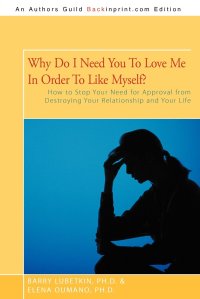
Dr Barry Lubetkin is the Director and founder of The Institute For Behavior Therapy in New York City. He is Board certified in both Clinical Psychology and Behavioral Psychology. He is the author of numerous academic and popular articles as well as two popular self-help books: “Bailing Out”and “Why Do I Need You to Love Me in Order to Like Myself”. He also has recorded the popular insomnia treatment CD set “Dr. Barry’s Sound Asleep.” The Institute for Behavior Therapy is the oldest privats.e Cognitive Behavior Therapy center in the United States founded in 1971. s have received treatment at the Institute.

Enhanced by Zemanta

Read Full Post »

I’m so pleased to introduce MENTAL HEALTH MONDAY to my readers.  I hope this becomes a regular feature and you will avail yourself of this opportunity to post a question or concern or contact our contributor, Barry Lubetkin, Phd, ABPP.

Barry Lubetkin is the Director of the Institute for Behavior Therapy and past president of the American Board of Behavior Therapy.  He has been a guest on Oprah Winfrey‘s show, a quoted source for numerous articles and a published author.  His latest book is Why Do I Need You To Love Me In Order To Like Myself.

Available through Amazon

Available through Amazon

Mental health tip for January 27, 2014

Nearly all anger feelings and outbursts are preceded by the cognitive belief represented by the words “should” or “must”….“He should never act that way”“She must act more fairly toward me”“He must stop drinking, I can’t stand it anymore”.  “The teacher should do more to discipline that child”….etc.  When we make unreasonable and inflexible demands on others or on the world to act in a certain way.  We set ourselves up for rage and upset when our irrational expectations are not met.  It is far better to wish or desire others to change rather than demanding and requiring them to do so…Or as famous Psychologist Albert Ellis once said: “Stop SHOULDING on yourself!!!”

Enhanced by Zemanta

Read Full Post »

I have a few more photos of those amazing and spectacular and humongous sculptures in Breckinridge, Colorado.  Since snow is predicted for tomorrow, these photo are so very apropos.

Snow Cathedral

Snow Cathedral

Hellooo I'm Here In Colorado!

Hellooo I’m Here In Colorado!

Your Queen Is In Danger

Your Queen Is In Danger

What Is This Doing Here?

What Is This Doing Here?

"And a tip o' the hat to you ma'm"

“And a tip o’ the hat to you ma’m”

Enhanced by Zemanta

Read Full Post »

PATIENCE

PATIENCE

Nick and Nora patiently wait for dinner BUT they already had it an hour ago!


Enhanced by Zemanta

Read Full Post »

English: Magdalen Laundry in England, early 20...

English: Magdalen Laundry in England, early 20th century. Scanned by Eloquence* from Finnegan, F.: Do Penance or Perish. A Study of Magdalen Asylums in Ireland. Congrave Press, Ireland, Piltown, Co. Kilkenny (2001). (Photo credit: Wikipedia)

With 12 Years A Slave and The Butler  sounding the alarm and need for civil rights in America, there was another less-talked about atrocity taking place in Ireland.   Across the sea in a convent in the town of Roscrea, Catholic nuns were running a babies-for-sale business.

If you were an unmarried and pregnant young girl in Ireland in the early 1950’s, you would surely be ostracized by your family and sent away to hide the shame you brought down on the family.  The pregnancy was the result of a mortal sin, so it was only natural for the family to turn to the Church for guidance and counsel.  

Philomena was sent away to the Roscrea Abbey to live and work until the baby was born.  The girls were treated as sinners, as evidenced by the denial of any painkillers during a painful breech birth delivery.  The girls signed away their rights to the baby and were indentured for years to repay the nuns for taking them in.  It is the Magdalene laundries all over again.  Childless Catholic American couples bought the babies and took them away to the United States.  That’s the back story and the basis for Philomena’s 50 year search for her long lost son, Anthony.

The film is about that search.  It was adapted from the book, The Lost Child of Philomena  Lee written by Martin Sixsmith.  Philomena hooks up with a fallen-from-grace journalist and together they set out to find Anthony who was renamed Michael and adopted by a Dr. Hess and his wife.  It’s through Martin’s former  Washington DC connections that facts are uncovered, names and whereabouts.  The ensuing road trip is hysterical at times.  Dame Judi Dench gives us an amazingly hilarious interpretive performance of woman whose mind is as Martin describes to his boss, “I’ve finally seen firsthand what a lifetime’s diet of Reader’s Digest, the Daily Mail and romantic fiction can do to a person’s brain.”  Their odd couple odyssey has some of the movie’s best dialogue.     As they travel across the big pond and back, Philomena’s unshakable faith and Martin’s (a fallen Catholic) disdain for religion clash.  As Lee becomes more serene, more accepting of the situation and all the more forgiving, Martin boils with rage at the injustice, the hypocrisy, the lies and most of all the institutional piety.

To adapt the book to the big screen and to introduce to Michael, the film relied on home movie flashbacks, which was a very effective way to let the audience see Anthony (Michael) grow up, while keeping the focus on Philomena.  There has been a decidedly different reaction to the movie.  Some see it as another attack on the Catholic Church and others as a heart-wrenching love story of a mother.  

I enjoyed the movie even though I had to endure the expected criticism of organized religion by my atheist  husband.  Being Catholic is not an advantage to viewing the movie, but there are moments that we appreciate all the more for being so.

Steve Coogan is truly wonderful as Martin Sixsmith.  Mr. Coogan bought the rights to the book before he even read it and he co-wrote the screen play.  


Enhanced by Zemanta

Read Full Post »

English: Two New Year's Resolutions postcards

Two New Year’s Resolutions postcards (Photo credit: Wikipedia)

Does everyone make New Year’s Resolutions? Do you announce them to the world? Do you write them down or post them to Facebook or your blog?  Do you keep them to yourself and hope you will be able to follow through?

WCTV ran a report on the Top Ten New Year’s Resolutions.  I’ll bet you can guess at least 7 of them.  If that’s the case and they are so obvious, doesn’t that mean that these resolutions are the ones most often broken and not kept?  Otherwise the list wouldn’t be so common and universal.  

Here they are and if your’s are among them you are probably just about the average American, whether that’s good or bad is for you to decide!

1. Lose Weight

2. Get Organized

3. Spend less, Save more

4. Enjoy life to the fullest

5. Stay fit and healthy

6. Learn something new

7. Quit smoking

8. Help others realize their dreams

9. Fall in love

10. Spend more time with my family

Please take a few moments and share one or more of your resolutions;  If you are not making them public, then just sign in as Anonymous.  Perhaps you’ll inspire someone else.

Happy New Year to all!!

Read Full Post »

If you have ever traveled to England or Ireland, you’ve probably heard the phrase, “…time for a cuppa”.  The British and Irish know how restorative a hot bracing cup of tea can be.  They start the day with English or Irish Breafast Tea and then indulge later in the afternoon with an Earl Gray, Chinese Oolong, Lapsang Souchong or Darjeeling.  The list of teas available in the United States is huge!  You can have Green Tea, White Tea, Black Tea, Herbal Tea, and exotic teas such as Assam, Prince of Wales, not to mention flavored teas ranging from Orange Spice to Lemon Verbena.

Tea is the perfect beverage for many occasions;  Served at ladies’ luncheons, bridal and baby showers, tea parties for kids and often is best when you can finally sit down during the day and sip a piping hot cup of tea – time to reflect and rest.

Well, I’ve seen this nifty new Alessi product on several sites and wanted to add to our countdown list.  The spoon forms a three-sided tunnel through which you draw the teabag.  No more burnt fingers, no more squeezing the tea bag and Ooops, it broke and now your tea cup has tea leaves in it.  This is a smooth and efficient way to remove the tea bag from your brewed cup.

Alessi Teaspoon

Alessi Teaspoon

The Alessi teaspoon is available online through many sites including Amazon.  You should be able to purchase for about$20.

Read Full Post »


Clueless

Clueless (Photo credit: Wikipedia)

I love discovering words and phrases from my youth and childhood that have gone by the way.  Not sure why since it only serves to herald my own impending demise, lol.  I’ve said this before – I find so many of these words and phrases from watching movies on Turner Classic Movies (TCM).  This weekend has been a bonanza AND when is the last time you ever heard someone under the age of 40 use the term BONANZA to describe a WINDFALL (yet another unused term)!


Let’s start with what is known as the minced oath.  The English, being naturally reserved found a way to communicate some explicit emotions without being really explicit.  They have a long tradition of double-entendre comedy.


Euphemisms aren’t all from the distant past though. For every Shaksperian ‘beast with two backs’ there’s a 20th century ‘knee trembler’.  The first phrase on my list is a perfect example of the above.


1. Jumping Jehosophat– Jehosophat is a euphemism for Jesus


2. Peel an eel – I couldn’t find any origin of this phrase or usage except in the Preston Sturgis film when the term is used as the equivalent of “go fry an egg” .   NOT to be confused with the phrase Peel the eel whose meaning I am not going into.


3. Pshaw – heard this word used when I was a child and even then it was a dated term.  It’s really a word imitative of the sound one might make when annoyed or disgusted.  Pronounced p-shaw or puh- shaw.


4. Poppycock – Means nonsense or rubbish.  Never heard anymore, so dated.  Sounds like something a retired English Colonel might say but it is NOT English, it is American in origin.  It may come from the similar Dutch word poppekak, which appears only in the old set phrase zo finn als gemalen poppekak, meaning to show excessive religious zeal, but which literally means “as fine as powdered doll shit”. The word was presumably taken to the USA by Dutch settlers; the scatological associations were lost when the word moved into the English-language community.


The first half of the word is the Dutch pop for a doll, which may be related to our term of endearment, poppet; the second half is essentially the same as the old English cack for excrement; the verb form of this word is older than the noun, and has been recorded as far back as the fifteenth century.


5. – Davenport – Davenport was the name of a series of sofas made by the Massachusetts furniture manufacturer A. H. Davenport and Company, now defunct. Due to the popularity of the furniture at the time, the name davenport became a generalized trademark, like aspirin.  


6. – Horsefeathers – It seems most likely that it began either as a bowdlerized variant of horse shit or as an expression of the view that something is highly unlikely, about as probable as that pigs might fly … or that horses might have feathers.  The issue of American Speech dated December 1928 records that “Mr. William De Beck, the comic-strip comedian responsible for ‘Barney Google,’ assumes credit for the first actual use of the word horsefeathers”. This claim has been frequently reported since, to the point at which it has become accepted knowledge.


Read Full Post »

« Newer Posts - Older Posts »